


Unmaking Interdependence: The Political Consequences of Economic Disengagement
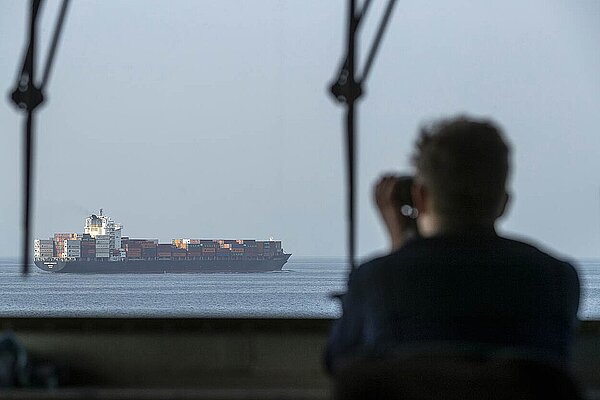
Reducing interdependence appears to be a rational response to experiences of vulnerability. By relying less on particular partners, states can reduce their exposure to sudden external shocks, such as pandemics, or to economic coercion by trading partners. Yet such policies also intervene in established political and economic relationships. Turning away from former partners can generate distrust and reduce other states' willingness to cooperate in the future.
The project centres on this ambivalence. It examines how disengagement from economic cooperation reshapes interstate relations and asks under what conditions these processes deepen political conflict and whether they can be managed without detrimental effects. It asks, in particular, whether the way disengagement is politically framed shapes its political consequences.
Building on International Relations scholarship on trade and conflict, the project develops a theoretical framework for analysing the political consequences of reducing interdependence. On this basis, it analyzes recent cases, in which states sought to reduce economic interdependence. It also examines an important side-effect of disengagement from established partnerships: the creation of new ones. Efforts to compensate for lost cooperation through new partnerships may themselves generate tensions and unexpected forms of political conflict.
The project contributes to a better understanding of how states can address genuine vulnerabilities without turning the reorganisation of cooperation into a source of enduring mistrust, fragmentation and conflict.
Image: Ministerie van Defensie / SGT Aaron Zwaal via Wikimedia Commons, CC BY-SA 4.0

Publications
- The Strait of Hormuz in Perspective: One Global Chokepoint, Multiple Vulnerabilities, Compounded Effects
| 2026
Birchinger, Sophia; Flamm, Patrick; Abb, Pascal; Al-Wally, Mariam; Driedger, Jonas J.; Kebede, Sandra; Koyier, Hilda; McKee, Sarah; Michelini, Sidney; Peters, Dirk; Sebgo, Jean-Baptiste; Simon, Hendrik; Standke-Erdmann, Madita; Stühlen, Christin; Trpkovic, Mina; Warnck, Skollan Elisabeth; Witt, Antonia; Xian, Yaolong (2026): The Strait of Hormuz in Perspective: One Global Chokepoint, Multiple Vulnerabilities, Compounded Effects, PRIF Blog, Frankfurt.
Publication - Sicherheit, die uns unsicher macht: Die neue Selbstverständlichkeit der Machtpolitik
| 2026
Peters, Dirk (2026): Sicherheit, die uns unsicher macht: Die neue Selbstverständlichkeit der Machtpolitik, PRIF Spotlight, 4, Frankfurt/M. DOI: 10.48809/prifspot2604 - Rezension: Inken von Borzyskowski, Felicity Vabulas: Exit from International Organizations. Costly Negotiation for Institutional Change
| 2026
Peters, Dirk (2026): Rezension: Inken von Borzyskowski, Felicity Vabulas: Exit from International Organizations. Costly Negotiation for Institutional Change, Portal für Politikwissenschaft.
Publication
 Download