


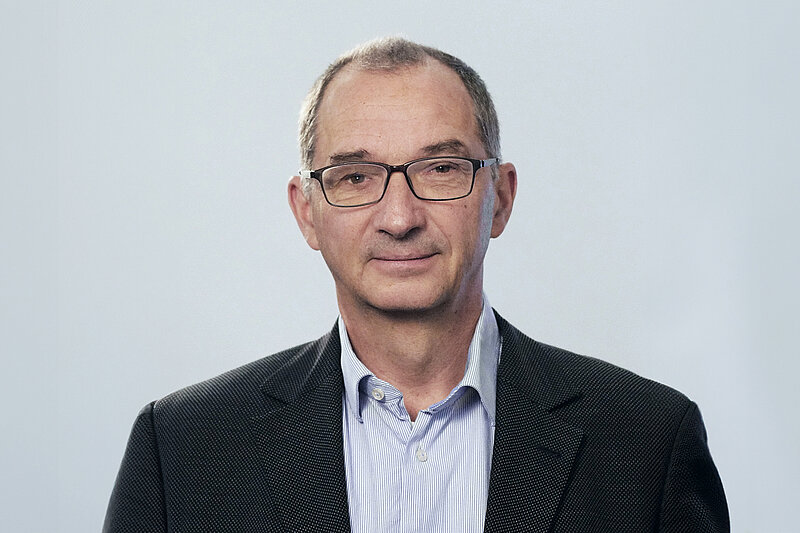
On September 21, 2026, Matthias Dembinski appeared as an guest expert before the Bundestag. Together with other experts, he contributed to the public hearing of the Subcommittee on “Arms Control and Proliferation Control, Nonproliferation, and International Disarmament” of the Foreign Affairs Committee on the topic of “Arms Control in Europe: The Future and Opportunities for the OSCE.” Matthias Dembinski was invited to the public hearing at the recommendation of the CDU/CSU parliamentary group.
“The key issue is managing military security with regard to Russia,” Matthias Dembinski told the committee. He called for launching a new dialogue and exchange on military risks. We must remember that coexistence works – and how it works.
In addition to Matthias Dembinski, Nadja Douglas of the German Institute for International and Security Affairs (SWP), Wolfgang Zellner of the Institute for Peace Research and Security Policy (IFSH) at the University of Hamburg, Alexander Graef of the European Leadership Network, and Wolfgang Richter of the Geneva Centre for Security Policy (GCSP) shared their views. The experts agreed that arms control is more important than ever in times of military confrontation. They advocated for the instruments available within the framework of the Organization for Security and Cooperation in Europe (OSCE) to be modernized and applied in light of technological and geopolitical changes. According to the experts, the organization should be strengthened as a forum for dialogue and utilized to monitor a ceasefire between Russia and Ukraine.
Given the changed geopolitical situation and the challenges facing Germany, the subcommittee focuses on strategic foresight in German foreign and security policy. At the same time, the subcommittee assumes a parliamentary oversight role with respect to the newly established National Security Council (NSR) in the Federal Chancellery. In doing so, it strengthens oversight and transparency of strategic decisions and contributes to the long-term institutionalization of strategic foresight within Parliament.
Matthias Dembinski is an Associate Fesearcher in the Research Department International Institutions and Director of the PATTERN project. His research focuses on issues of justice in international relations, regional security organizations, and humanitarian interventions. A summary of the session and the full statements can be found on the German Bundestag’s website.