


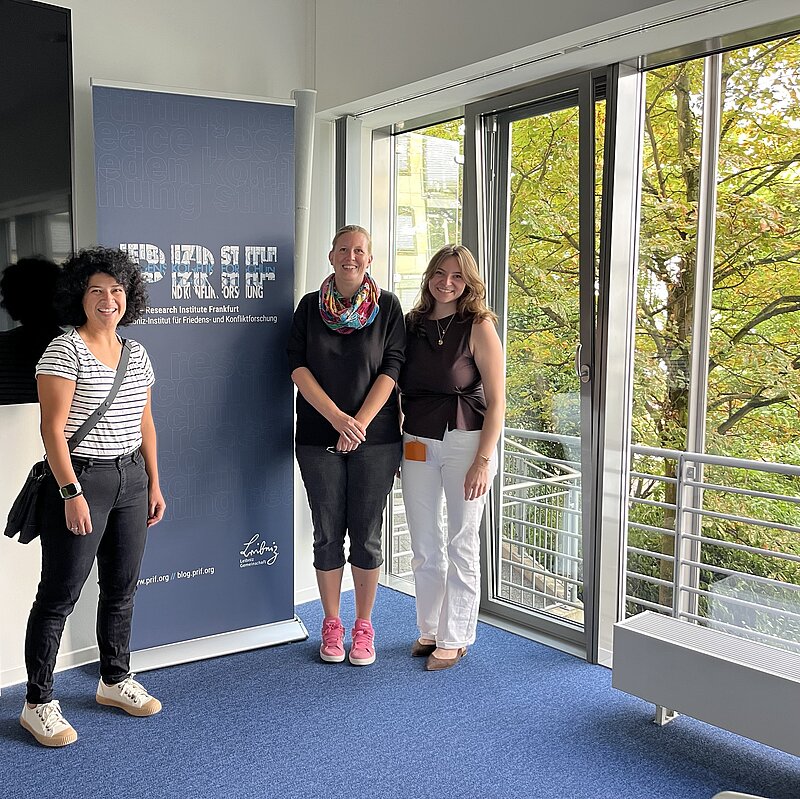
Stefan Kroll and Daniela Hobel welcomed the students and gave them an insight into the work of the PRIF. In her presentation, Daniela Hobel introduced her research and discussed fundamental questions of peace and conflict studies with the class. Among other things, the discussion focused on the difference between negative and positive peace and the question of when a situation can actually be described as a conflict.
Using the decades-long conflict in Colombia as an example, the class worked with Daniela Hobel to explore how protracted conflicts can be ended and what role peace agreements play in this process. The students examined how such agreements are negotiated and implemented, and why a peace agreement does not automatically mean that the root causes of a conflict have been eliminated. The discussion also addressed the influence of political changes — such as changes in government — on peace processes and conflict management. Another focus was on political speeches. In preparation, the students had studied a speech by Nobel Peace Prize winner Malala Yousafzai.
The visit gave the students the opportunity to examine current political issues from the perspective of peace and conflict studies. In addition, they discussed how they stay informed about political conflicts and how they perceive the culture of debate on such topics at their school.